
"trees are most suitable for coffee"
5000 article(s) found

Introduction to fine coffee with moist and smooth taste in Hawaiian Coffee Manor
The excellent quality of Kona coffee benefits from the suitable geographical location and climate. Coffee trees grow on the slopes of volcanoes, and their geographical location ensures the altitude needed for coffee growth; the dark volcanic ash soil provides the necessary minerals for coffee growth; and the climatic conditions are very suitable. The morning sun gently passes through the steamy air, and in the afternoon, the mountains become more and more.

What's the flavor of Kenyan coffee? Kenya is suitable for cooking?
Professional coffee knowledge exchange more coffee bean information Please pay attention to Coffee Workshop (Wechat official account cafe_style) Kenya, located in East Africa, is one of the major coffee producing countries. More than 6 million people in the country are engaged in the coffee industry, mostly in the form of a combination of small farmers and cooperatives. Coffee trees in Kenya are mostly planted at 1400-2000 meters above sea level, and the growth area includes Ruiri.

Introduction to the production area of Hawaiian coffee bean flavor description method grinding scale variety
Although Hawaii is often affected by tornadoes, the climatic conditions are very suitable for the coffee industry. There is plenty of rain and sunshine, and there is no worry of frost. In addition, there is a strange natural phenomenon called free shade. On most days, around 2 o'clock in the afternoon, white clouds appear in the sky, providing the necessary shade for the coffee tree

Introduction of Coffee Flavor-- an introduction to the Flavor characteristics of Asian, African and American products
There are more than 6000 species of coffee trees, most of which are tropical trees and shrubs. There are four main coffee trees in the world, of which only two are of real commercial value and are planted in large quantities, and the quality of the coffee beans produced by other coffee trees is also higher than that of other coffee trees. The first is Arabica beans, the world-famous Blue Mountain Coffee, Mocha Coffee and so on.

How to plant a coffee tree? The natural conditions of coffee cultivation and the skills of growing coffee.
How to grow coffee well? First of all, geographically, the golden planting belt of coffee is centered on the equator, covering the appropriate temperature from 25 north latitude to 25 south latitude. Coffee likes a warm environment, hardy but not hardy, and the most suitable planting temperature is between 16 degrees Celsius and 21 degrees Celsius. Good land environment, fertile soil. The most suitable soil for growing coffee is in the plains and mountains.
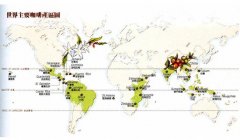
Coffee growing belt
Most of the coffee producing areas in the world are located in the tropics between the Tropic of Cancer and the Tropic of Cancer, which we call the "coffee belt" or Coffee Belt or Coffee Zone in English.
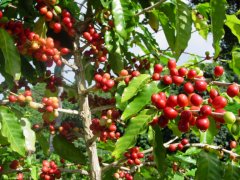
Coffee planting technology to share the growth process and planting conditions of coffee the life span of coffee trees is only …
Professional coffee knowledge exchange more coffee bean information please follow the coffee workshop (Wechat official account cafe_style) A coffee tree bears fruit several times a year. This time, we would like to introduce the whole process of coffee beans from planting to picking, so that we can fully understand the process of coffee beans from scratch. The growth process of coffee is from seeds (or cuttings, grafting) at the seedling stage.

Basic knowledge of Coffee Coffee planting Belt
Most of the coffee producing areas in the world are located in the tropics between the Tropic of Cancer and the Tropic of Cancer, which we call the coffee belt and Coffee Belt or Coffee Zone in English. As a tropical cash crop, coffee trees grow in coffee belts with excellent climatic conditions, where the sun shines all the year round, is rich in calories and Rain Water, and the annual average temperature is above 20 ℃. But the high temperature

The roasting process of coffee tree fruit from coffee tree to coffee
Coffee is a perennial evergreen shrub or small tree of Rubiaceae. It is a horticultural perennial cash crop with the characteristics of fast growth, high yield, high value and wide market. Wild coffee trees can grow to a height of 5 to 10 meters, but coffee trees planted on the manor are often cut to less than 2 meters in order to increase their fruit and facilitate harvesting. The first flowering period of a coffee tree is about the age of the tree.

Coffee knowledge the growth trainee of coffee trees
Coffee trees belong to the evergreen family of Akanaceae. They are tropical plants that are not cold. Most of them are planted in areas with elevations of 300,400m, and also in highlands with elevations of 2000-2500 meters. But those who plant on slopes above 1500 meters above sea level have better quality. Coffee trees are most suitable for growth when the average temperature is about 20 degrees Celsius, the annual precipitation is 1500-2000 mm, and the soil is permeable.

Hawaiian Coffee Flavor Description Production Characteristics Fine Coffee Bean Taste Grind Introduction
The excellent quality of Kona coffee is due to its location and climate. Coffee trees grow on the slopes of volcanoes, and their location ensures that coffee grows at an altitude; dark volcanic ash soil provides the minerals needed for coffee growth; climatic conditions are very suitable, and the sun gently passes through the air filled with moisture in the morning, and in the afternoon, the mountains become more

Understanding Coffee trees and their planting conditions
1. What is the origin of coffee trees in Ethiopia in Africa. Coffee tree is a perennial evergreen shrub or small tree of Rubiaceae. It is a horticultural perennial cash crop with the characteristics of fast growth, high yield, high value and wide market. Wild coffee trees can grow up to 5 to 10 meters high, but the coffee trees planted on the manor are more in order to increase the amount of fruit and facilitate harvesting.

How to cultivate coffee trees? The planting conditions of coffee trees? Common sense of coffee beans?
Professional coffee knowledge exchange more coffee bean information please follow the coffee workshop (Wechat official account cafe_style) this time we will introduce the whole process of coffee beans from planting to picking, so that we can fully understand the process of coffee beans from scratch. The growth process of coffee the seedling stage is the period from the germination of seeds (or cuttings, grafting) to the emergence of seedlings (nursery nursery)
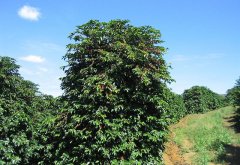
Coffee knowledge from Coffee Tree to Coffee
Coffee trees grow coffee as perennial evergreen shrubs or small trees of Rubiaceae. It is a horticultural perennial cash crop with the characteristics of fast growth, high yield, high value and wide market. Wild coffee trees can grow to a height of 5 to 10 meters, but coffee trees planted on the manor are often cut to less than 2 meters in order to increase their fruit and facilitate harvesting. The first opening of a coffee tree

(turn) from coffee tree to coffee
Coffee is a perennial evergreen shrub or small tree of Rubiaceae. It is a horticultural perennial cash crop with the characteristics of fast growth, high yield, high value and wide market. Wild coffee trees can grow to a height of 5 to 10 meters, but coffee trees planted on the manor are often cut to less than 2 meters in order to increase their fruit and facilitate harvesting. The first flowering period of a coffee tree is about the age of the tree.

A brief introduction to the flavor, taste and aroma characteristics of Katim boutique coffee beans suitable for deep baking
Coffee is a semi-shaded tree species, it is recommended to establish a moderate shade degree of 3040%. In the site environment of growing coffee in our province, it is generally difficult to solve the problem of water conservancy and irrigation. the water season is in the dry season, and it is also the season to compete with other crops for water. It is not easy to rely on irrigation to meet the water demand in the coffee field. It is necessary to loosen the soil in time after the end of the rainy season and adopt dead objects on the ground.

The planting Environment of Coffee trees what kind of environment does coffee trees need to have?
The planting of coffee trees has great requirements on the environment. There are only two areas in China where coffee trees can be planted. The origin of coffee trees is Ethiopia in Africa. In botany, coffee tree belongs to the evergreen tree of the subgenus Rubiaceae, and coffee beans, commonly known as coffee beans, are the seeds of the fruit of coffee trees, just because they are shaped like beans, so they are called coffee.
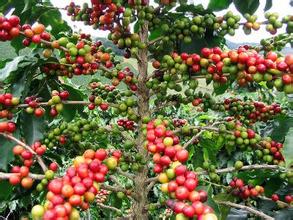
A brief understanding of the varieties of coffee trees, a detailed analysis of the classification of coffee trees.
Different varieties of coffee beans have different tastes, but even the same varieties of coffee trees have their own unique flavor due to the influence of different soil and climate. 1. Arabica Coffee Tree (coffeaarabica) originated from Arabica Coffee Tree in Ethiopia, which accounts for 70% of the world's coffee bean production. The world-famous Lanshan Gaffin and Mo
Coffee beans suitable for blending blended coffee-Costa Rica C
Costa Rica Coffee: Costa Rica Coffee is produced in the Republic of Costa Rica (The Republic of Coffee) in southern Central America. Its coffee quality is similar to that of Colombia coffee, which is suitable for blending mixed coffee. Costa Rica is bordered by the Pacific Ocean to the west and the Caribbean Sea to the east. Costa Rica means "rich coast" in Spanish.

Hawaiian Coffee Flavor Description Grind Characteristics Variety Producing Area Taste Boutique Coffee Introduction
Real Hawaiian Kona coffee gives you a unique pleasure and leads you slowly into the transcendent state of coffee tasting. And this is all from the oldest Arabica coffee tree. Hawaii is the only state in the United States to grow coffee, which is grown on the five main islands of the Hawaiian archipelago: Oahu, Hawaii, Maui, Kauai and Mauroka.